
'/%3E%3Cpath%20fill='%23b2b2b2'%20d='M241%20382q0%2016%2017%2026%2017%2011%2042%2011t42-11q16-11%2017-26V269H241'/%3E%3Cpath%20fill='%239f7e00'%20d='M241%20379q0%2014%208%2023%209%209%2021%209%2014%200%2021-9%209-9%209-23V269h-59'/%3E%3Cpath%20d='M241%20339v-70h59v110q0%2014-9%2023l-6%205v-68h-15v72q-8%200-14-4v-68zm59%2040c0%2022%2015%2032%2029%2032%2021%200%2030-18%2030-32v-40h-59'/%3E%3Cpath%20fill='%239f7e00'%20d='M266%20277v5h2v12h-3v-5h2v-5h-9v5h2v5h-4v9h3v18h-5v10h34v-10h-5v-18h3v-9h-4v-5h2v-5h-9v5h2v5h-3v-12h2v-5zm42%20101q0%2010%206%2017%206%206%2015%207%2010-1%2016-7%206-7%206-17v-29h-43'/%3E%3Ccircle%20fill='%230044ad'%20cx='329.5'%20cy='372'%20r='6'/%3E%3Cellipse%20fill='%230044ad'%20cx='300'%20cy='340'%20rx='16'%20ry='21'/%3E%3C/svg%3E)


Carnival
Carnivals are festivals celebrated all over the world towards the end of winter. It has been believed that in the Basque Country there was a call to awaken the earth with noise.
Carnival has to do, as already mentioned, with the celebrations of the spring equinox before the arrival of Christianity.
There are currently two types of carnival in the Basque Country. On the one hand, those more closely linked to traditional celebrations and mythology, and on the other, the more modern ones.
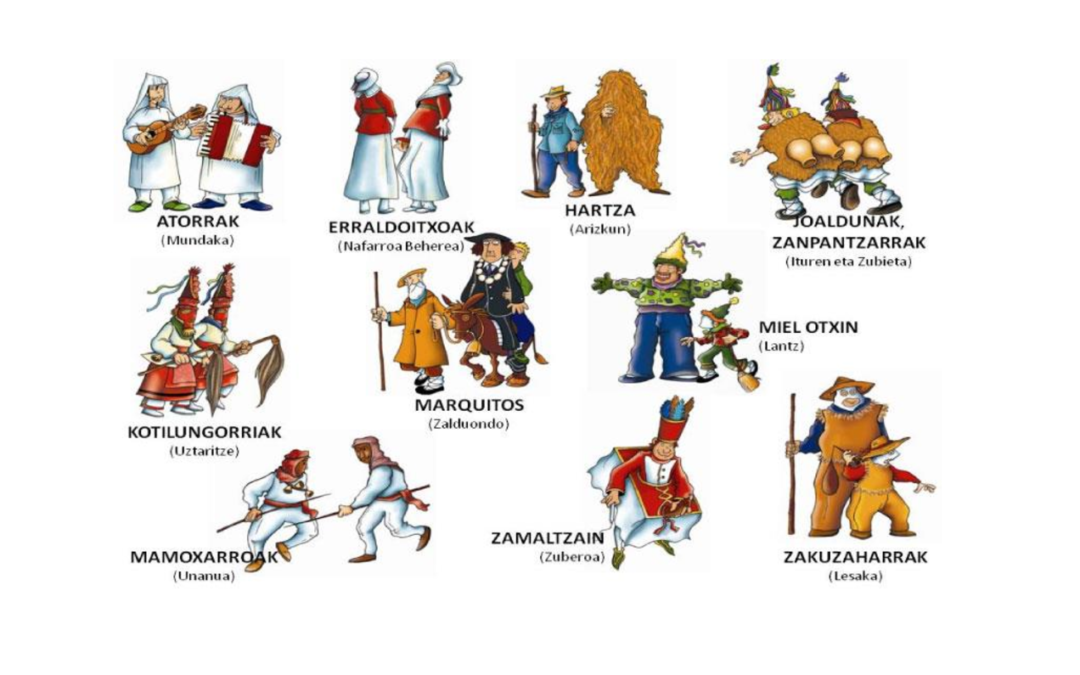
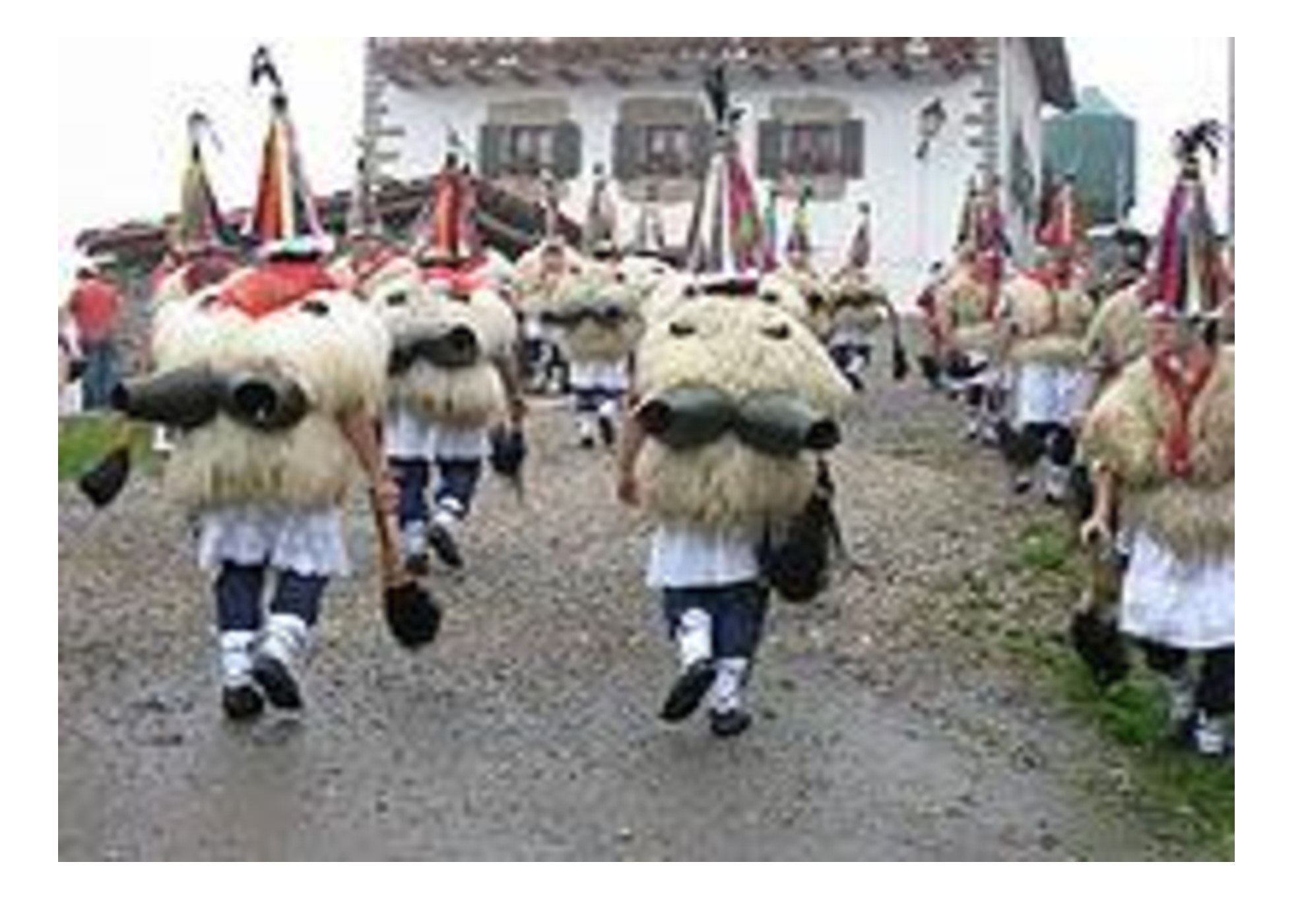
Traditional carnivals are related to nature and ancestral customs. In the beginning, shepherds and villagers dressed up in animal skins. They were related to mythology and, depending on the village, various celebrations were held. Today these traditions are still respected and some villages have become very famous. The carnivals of Lantz or the masquerades of Zuberoa, for example.
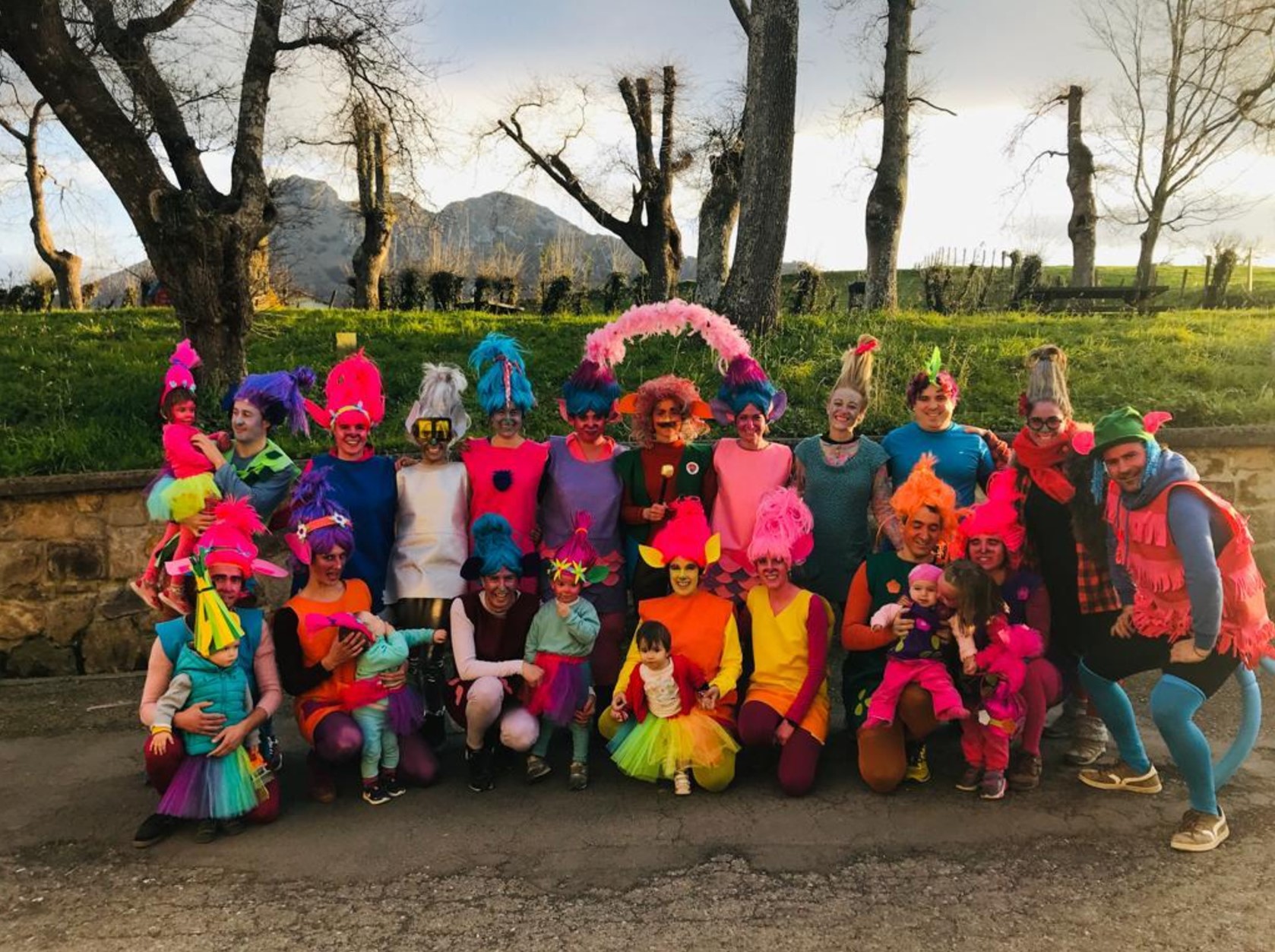
When talking about modern carnivals, one of the most famous is the Carnival of Tolosa. In this type of carnival, the floats are the most important elements. There is a parade of floats full of colour and light, most of the time accompanied by music. They have less to do with tradition and are more spectacular. They usually vary from year to year.

Antzeko Artikuluak
Korrika 2026
KORRIKA is a race in support of the Basque language organised by AEK. It covers the whole of the Basque Country and has two objectives: on the one hand, to raise awareness in favour of the Basque language, and on the other, to raise funds to carry out this work on a...
Santa closed
Black Friday, another tradition borrowed from the United States. This is a commercial event that marks the unofficial start of the Christmas shopping season.The term ‘Black Friday’ emerged in the 1960s in Philadelphia. Police officers used it to describe the chaos and...
Gastronomic clubs
The first gastronomic club was created in the city of San Sebastián in the 19th century. They are also known as “txokos” and are a very important part of Basque culture.These societies combine cuisine, companionship, and solidarity, and were created as informal...